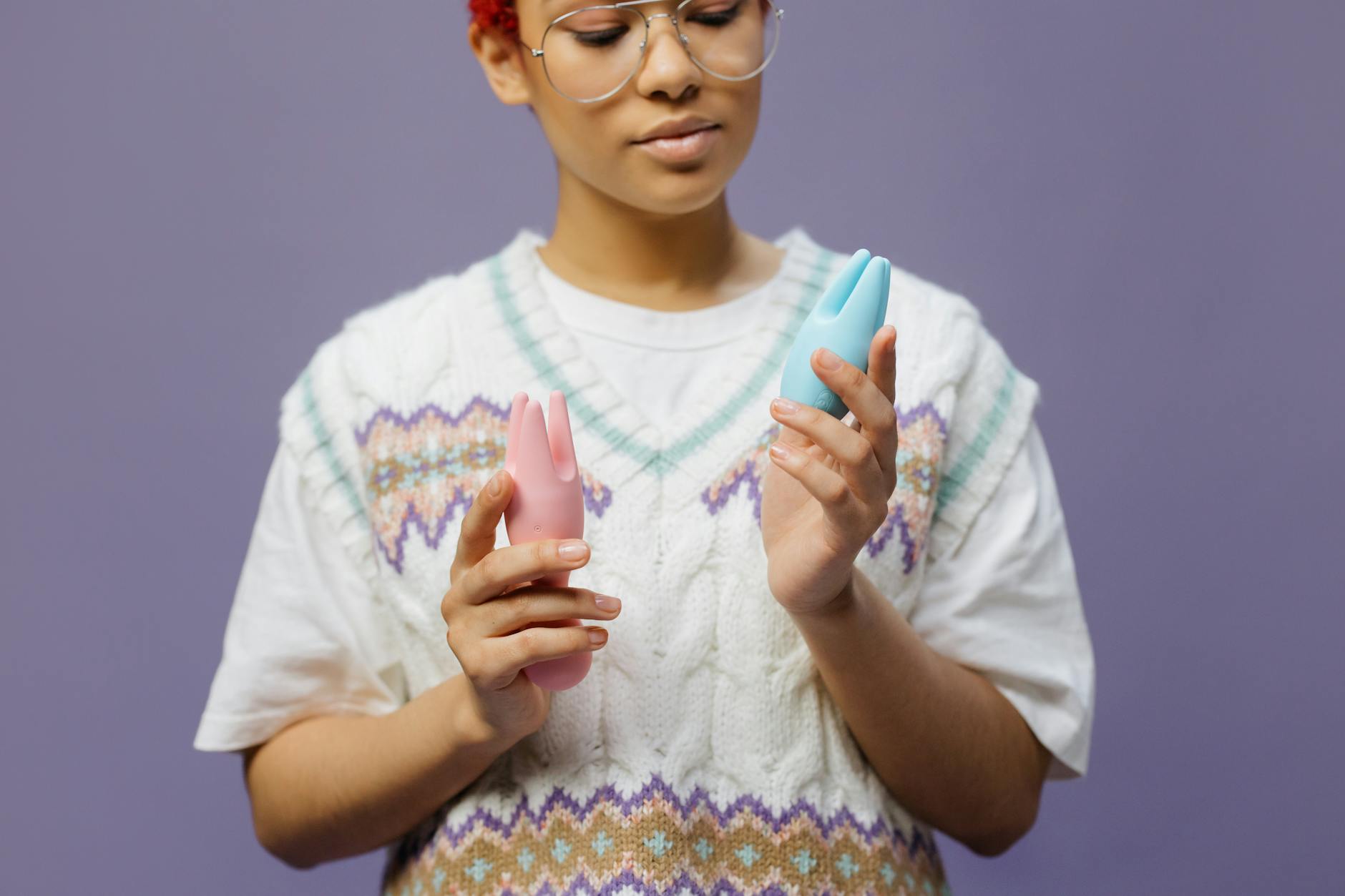
You've got your lemon vibrator. The device is beautiful, the reviews are solid, and then you turn it on and realize: what the hell do I do now? Do I start at the lowest setting? Jump to medium? There's no instruction manual that covers the actual experience of figuring out what feels good.
Here's the thing. Intensity isn't one-size-fits-all. Your perfect setting might feel overwhelming to your partner, and what felt amazing last week might feel wrong this week. Learning to dial in the right speed for your body isn't fussy or overthinking. It's the difference between "this toy is okay" and "this toy changed everything."
When I work with couples, the most common complaint I hear about vibrators is "it's too intense" or "I can't feel it doing anything." Neither of these is a device problem. They're both intensity-matching problems.
The lemon vibrator works through rapid, precise stimulation on a sensitive area. Too much intensity and you numb the nerves. Too little and your brain can't register the signal. There's a Goldilocks zone for your specific body, and finding it transforms the whole experience.
Sensitivity varies for biological reasons. Nerve density in the clitoral area differs person to person. Hormone cycles affect sensitivity. Stress, arousal level, and how recently you've used the toy all shift your tolerance. A lemon clitoral vibrator that felt perfect on Tuesday might feel harsh on Saturday. That's not a flaw. That's your body giving you real-time feedback.
I know this sounds boring. Most people want to jump to medium or high because lower feels like "nothing's happening." Resist that.
The lowest intensity on a quality lemon vibrator is still quite intense to tissue that hasn't been primed yet. When you're not fully aroused, lower intensity might genuinely feel like nothing. But once blood flow increases and your nervous system wakes up, that same setting becomes perfect.
Spend five to ten minutes on the lowest setting. Let arousal build naturally. Your body will tell you when you're ready to turn it up. The weird part is that once it does, you might find you never need to leave that lowest setting. Many people discover they prefer it because the sensation stays novel and the orgasm feels deeper.
If after ten minutes you genuinely feel nothing and you're already fully aroused, then move to setting two. But do it slowly.
Instead of jumping from 1 to 5, try this rhythm: stay on one setting for at least five minutes before moving up. Notice what happens to your body. Are you getting closer to orgasm? Is the sensation staying interesting or becoming numb? Are you wanting more, or is this actually just right?
Here's what I recommend for a first session:
Setting 1: Five to ten minutes. Arousal builds, you explore where you want the toy positioned. No goal of orgasm yet.
Setting 2: Three to five minutes. Intensity increases, sensation changes. Notice if it feels better or if it's pushing you toward numbness.
Setting 3: Two to three minutes. Only go here if settings 1 and 2 felt good. This is where many people find their sweet spot.
Stay at one setting for orgasm. Don't keep chasing higher. Pick the one that feels best and let it work.
What you're doing here is mapping your own sensitivity in real time. That map is your personal guide. Write it down if you want. "I prefer setting 2 when I'm stressed. Setting 3 when I'm fully aroused. Setting 1 when I want it to last longer."
One of the weirder discoveries most people make is that they're less sensitive once they're extremely aroused. This sounds backwards. It's not.
As arousal climbs, blood rushes to your genitals. The tissue swells. Nerve endings are stretched slightly. Sometimes this increases sensitivity. Sometimes it deadens it a little. If you've ever noticed that touch feels different as you get closer to orgasm, you're experiencing this.
This is why starting low matters so much. If you blast yourself with high intensity when you're not aroused, you've already numb the nerves by the time your arousal peaks. Then you need to keep turning it up to feel anything. You've essentially trained your body to need more and more.
If you start low and let arousal build slowly, you ride the wave of increasing sensitivity. You might end up using the same low setting for an incredible orgasm, then not be able to use that setting for days because you've temporarily reduced nerve responsiveness.
Yes, that's normal. Yes, it resets. Give yourself 24 to 48 hours before using the toy again if that happens.
Honestly though, the fix for numbness is counterintuitive and it works every time.
If you're using a lemon vibrator and the sensation starts feeling dull or flat, your instinct is to turn it up. Don't. Turn it down instead. Drop two or three settings. Give your nerves a break for a minute or two. Sensation will come back almost immediately, and when it does, it'll feel sharper than before.
This is true for the clitoral area specifically because the nerves there have a faster adaptation response than almost anywhere else on your body. Constant input equals numbness. A little break equals sensitivity reset.
This one catches people off guard. If you're using plenty of lubrication, vibrations feel softer and more diffuse. With less lube, vibrations feel more intense and more localized.
This matters because the Lem and other lemon clitoral vibrators work via air suction or rapid tapping, not direct vibration. Lube changes how that stimulation travels through the tissue. More lube equals sensation spreading wider but with less peak intensity. Less lube equals more concentrated sensation.
If you find a particular intensity setting feels too strong, try adding lube instead of turning it down. Often that's the actual fix. And if a setting feels weak, reducing lube might be the answer instead of turning up the speed.
If you menstruate, your sensitivity shifts through the month. Right before your period, the clitoral area is often more sensitive and more engorged. Many people need lower intensity settings. A few days after your period ends, sensitivity often drops and people want higher settings.
This isn't a problem to solve. It's just information. If you track your cycle alongside your toy preferences, you'll start to see the pattern. Some people keep a quick note: "Day 5 of cycle: prefer setting 2. Day 20: prefer setting 3." It takes thirty seconds and saves a lot of "why doesn't this feel as good as last time" confusion.
Partners can use this info too. If you're using a lemon vibrator together, knowing that your sensitivity shifts might explain why something that felt amazing last month feels off this month.
Stress and anxiety change everything about pleasure, including how you perceive intensity.
When you're anxious, your nervous system is already activated. A moderate intensity setting can feel overwhelming because your body is already in overdrive. When you're relaxed and present, that same setting feels perfect. When you're anxious, something you'd normally love might feel intrusive.
I tell people to have three default settings in mind. One for when you're relaxed. One for when you're moderately stressed. One for when you're anxious. It takes one session to figure out what those are for your body, and then you can adjust before you even turn the toy on.
If you're having trouble with intensity during partnered play, this is often the culprit. Your partner isn't doing anything wrong. Your nervous system is just protecting you. The solution is lowering intensity, not pushing through.
Your perfect lemon vibrator intensity isn't a fixed target. It evolves.
Right now, you might need to climb to setting 3. In six months, you might prefer setting 2. After a year of regular use, your preference might shift again. This is actually a sign that you're getting more in tune with your body, not that the toy is losing its effectiveness.
The more you use the device, the more familiar your nervous system becomes with that specific sensation. Your brain learns what to expect. Sometimes that means you want to dial back because you can access pleasure more easily with lower intensity. Sometimes it means going higher because you're experimenting with different sensations. Both are fine.
What matters is that you're listening to what your body is telling you instead of following rules about how you "should" use a vibrator. There are no rules. There's only feedback.
Completely normal. Your sensitivity shifts with stress, sleep, hydration, hormones, and how recently you've used the toy. If something felt perfect last week and feels different now, it's not the toy failing. Your body is giving you real-time data. Honor it. Try a different setting. Most people find they have a range of 2 to 3 settings that feel good depending on the day.
You can temporarily reduce nerve responsiveness if you use very high intensity for extended periods or frequently. Your sensitivity comes back within 24 to 48 hours of rest. The way to avoid this entirely is to stay in the lower to medium range most of the time and save high intensity for occasional use. Think of it like sun exposure: a little bit is fine, constant blasting can leave you numb.
Your preferred intensity is not up for debate. It's about your body and your pleasure. If you partner wants to use a different setting, they can do that when it's their turn. If they're using it on you, your comfort comes first. How to Use a Lemon Vibrator With a Partner covers this in detail, but the short version is: your body, your settings. Full stop.
Yes. More settings give you finer control, but they're not inherently better. A device with 3 settings can be just as satisfying as one with 10. What matters is whether those settings are in the range that works for you. Some devices cluster their settings in the lower range. Others concentrate them at the high end. Check reviews from people with similar sensitivity to yours to find the right match.
Not necessarily on your first try. If you're curious, fine. But do it when you're fully aroused, have plenty of lube, and aren't worried about being interrupted. High intensity is intense. On a body that's not ready, it can feel uncomfortable or create numbness that lasts hours. Save it for when you're confident about your baseline preferences.
If it hurts, it's too much. If it feels pleasant, even if it's lower than you expected you'd want, that's your answer. If it feels numb or distant, that's also too much (counterintuitively). Your pleasure shouldn't require you to tolerate discomfort. If lower settings give you better orgasms, lower settings are right. Period.
Finding your perfect lemon vibrator intensity isn't about following rules or being a "good" user of the device. It's about learning your own body well enough to ask for what feels good and having the tools to get it.
Start low. Stay present. Notice what changes as arousal builds. Adjust based on feedback, not on what you think you should want. Your body knows. You just have to listen to it.
If you're still figuring things out or have questions about how to use your device, our team is here. Reach out anytime at /contact.