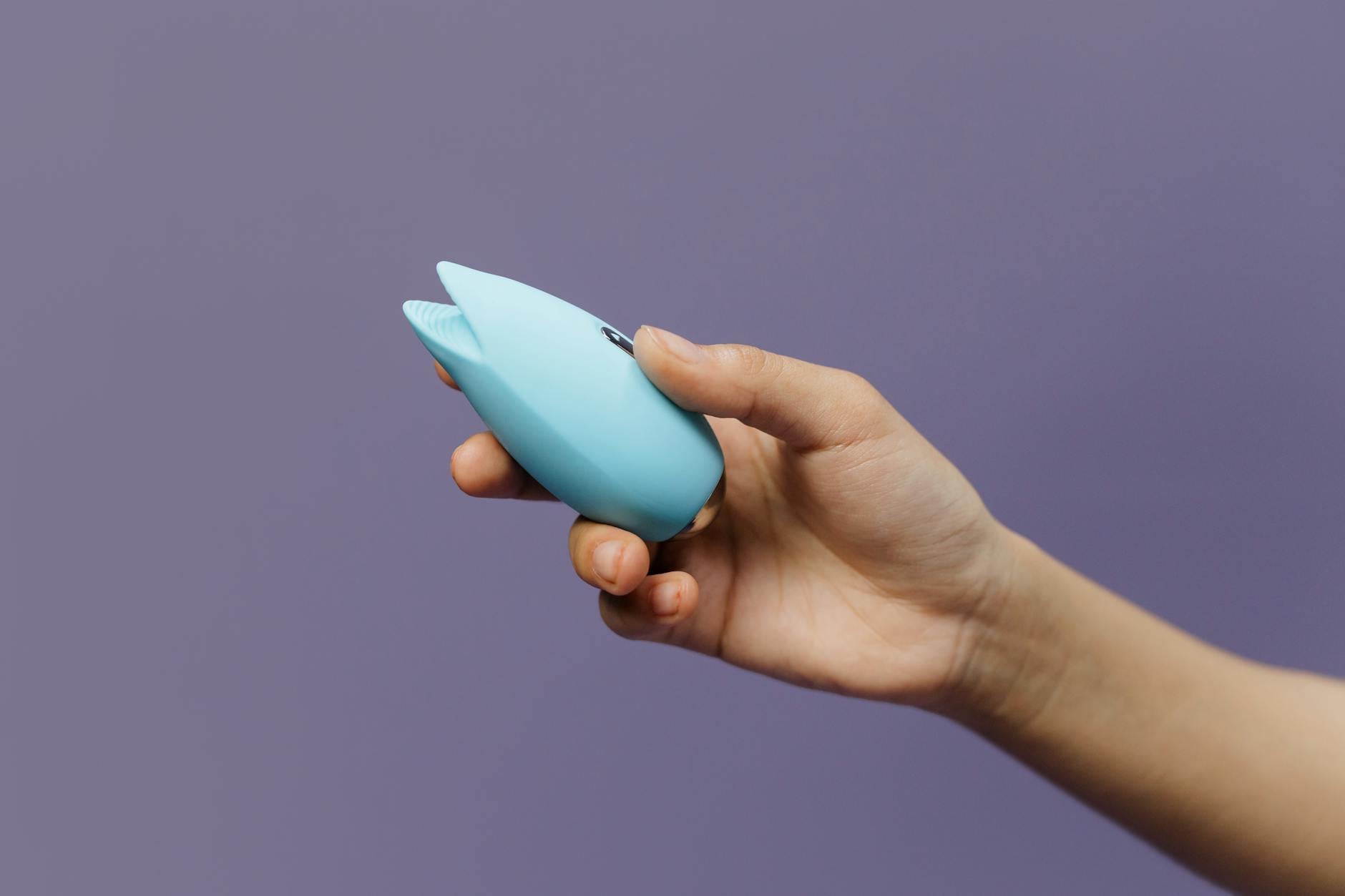
The conversation is not the hard part. The actual hard part is the two weeks before the conversation, when you're catastrophizing in your head about whether your partner will feel replaced, rejected, or insulted. Spoiler: most of that anxiety lives rent-free in your brain and nowhere else.
I've worked with hundreds of couples navigating this exact moment. What I see over and over is that the introduction itself is surprisingly straightforward. The real work happens in how you frame it: as a solo exploration tool that sometimes involves them, or as a shared experience you want to deepen together. Those are fundamentally different conversations, and they land differently.
Don't bring it up during sex. Don't bring it up when one of you is tired, stressed, or distracted. Don't bring it up as a response to something your partner said or did in the bedroom ("Well, if you could make me come faster, I wouldn't need this"). Those are all recipes for defensiveness.
Instead, pick a moment outside the bedroom when you're both relaxed and the conversation can breathe. A car ride, a walk, over coffee. Somewhere neutral where neither of you is vulnerable or in a hurry.
I tell my clients: treat this like you're sharing a piece of information about yourself, not making a request that requires approval. "I've been thinking about exploring with a lemon vibrator, and I'd like your input on whether you want to be part of that" is miles different from "Can I get a lemon vibrator?" One opens a door. The other puts your partner in a gatekeeping position.
"I've been learning about clitoral vibrators, specifically how they work differently than what we've been doing. I'm curious to explore that, both solo and maybe with you. I want to talk about what that looks like."
Notice what's in there: you're talking about your own curiosity, not about what's missing. You're naming the lemon vibrator specifically, which removes the mystery. You're being direct that this is something you want to try, not something you're asking permission for. And you're explicitly inviting them into the process without making them responsible for your pleasure.
If your partner seems hesitant, resist the urge to defend yourself. Instead, get curious about their hesitation. "What comes up for you when I say that?" is a better follow-up than "You don't have to feel threatened." The second one dismisses their reaction. The first one actually hears it.
Most partners' anxiety boils down to one of three things.
One: "Will you need me less?" This is real, and dismissing it doesn't help. The honest answer is sometimes you'll use your lemon vibrator solo, and that's fine. But clitoral vibrators like the Lem are often better integrated into partnered sex, not instead of it. You can use it during intercourse, during oral, during foreplay. It's additive, not replacement. Say that.
Two: "Does this mean I'm not enough?" This one usually needs a conversation about the difference between wanting something new and being unsatisfied. You can be wildly satisfied by your partner and still want to explore. Those don't contradict each other. Your pleasure expanding doesn't mean your partner's role shrinks.
Three: "I don't know how to use it, and I'll feel stupid." This is the easiest one to fix. You learn together. You read the instructions out loud like you're solving a mystery. You laugh. You mess up. That's actually where a lot of couples find new connection.
Start with the easiest scenario: your partner can see it, touch it, help guide it. That removes a lot of the weirdness because they're involved from the start, not blindsided by you pulling out a device mid-sex.
You might say: "I want to try using this while we're together. Want to help me figure out where it feels good?" This makes them an active participant, not an observer.
Let them hold it sometimes. Let them experiment with intensity and angle. Some partners find that participating in the mechanics of bringing you pleasure is actually more intimate than just watching. They get to learn your body in a new way.
If you're having intercourse, a lemon clitoral vibrator can work beautifully during that too. The stimulation is independent of penetration, which means it can enhance the experience for both of you without complicating the mechanics.
Honestly? Both. You should feel free to explore on your own. That's not less intimate. That's information gathering. The more you know about what works for your body, the easier you can communicate that to a partner.
When you do bring it into partnered sex, don't feel like it has to be every time. Sometimes you're just having sex the way you always do. Sometimes you want to add the vibrator. Those are equally valid choices, and the freedom to choose keeps the experience from feeling like a requirement.
If you're in a longer-term relationship, check in periodically. "How are you feeling about this?" doesn't have to be serious. It can be playful. But it matters. Things that feel good at month two might feel different at month eight, and that's information worth having.
It's not the sex itself. It's the fact that you've named something that was previously unspoken. You've made it possible to talk about what you want, what feels good, what you're curious about. That skill transfers everywhere.
Couples who can say "I want to try a lemon vibrator" can also say "I want us to go to therapy," "I'm feeling disconnected," and "I need more help with the house." The conversation about the vibrator is just practice.
Your partner might surprise you. They might get curious too. They might want to explore together in ways you didn't expect. Or they might need some time. Both are fine. The point is you've opened a door that most couples keep locked, and that alone shifts something.
Neither, quite. Frame it as a conversation, not a request or an announcement. You're sharing information about your body and your desires, and you're inviting them into that world. "I've been thinking about exploring with a clitoral vibrator, and I'd like your thoughts" lands differently than "Can I get one?" or "I'm getting one." The first creates space for dialogue.
Then you get curious instead of defensive. "What's coming up for you?" or "Help me understand your hesitation" opens the conversation instead of shutting it down. Sometimes the "no" is temporary. Sometimes it's real. Either way, you need to understand what's underneath it before you decide what to do next. And if after that conversation they still aren't comfortable, that's information about your relationship and your compatibility that matters.
Start smaller. You don't have to jump to "let's use a vibrator together." You could start with "I've been reading about how clitoral vibrators work differently than other types of stimulation. I'm curious about trying one." That opens the door without demanding an immediate answer about partnership. Often, once they know you're exploring, they'll ask questions. Let them ask.
Not weird, but timing matters. You don't need to bring a lemon vibrator into month-one sex. Give the relationship enough time to build basic trust and communication. Once you've established that you can talk about sex without it being shameful, then the conversation about vibrators lands better. That usually takes a few months, depending on the couple.
That's actually common. You asked for support, they're offering it, and now you're anxious about the reality. That's worth naming. "I'm excited but also a little nervous" is a true statement. Most partners will slow down, check in, and make it feel safer. The nervousness usually passes once you realize nothing catastrophic happens.
Sometimes. A vibrator won't fix a fundamental mismatch in desire or a relationship problem that goes deeper. But for couples where one person has lower desire and wants to explore what might help, a clitoral vibrator can occasionally shift things. Talk about it as exploration, not as a fix. If the low desire is stemming from something else—stress, disconnection, resentment—the vibrator isn't the conversation you need to have first. That's a relationship conversation.
Introducing a lemon vibrator into partnered sex is less about the device and more about the conversation skill it develops. Once you've talked about this, you've proven to yourselves that you can discuss what you want and what feels good. That's the real gift. The vibrator is just the vehicle that gets you there.