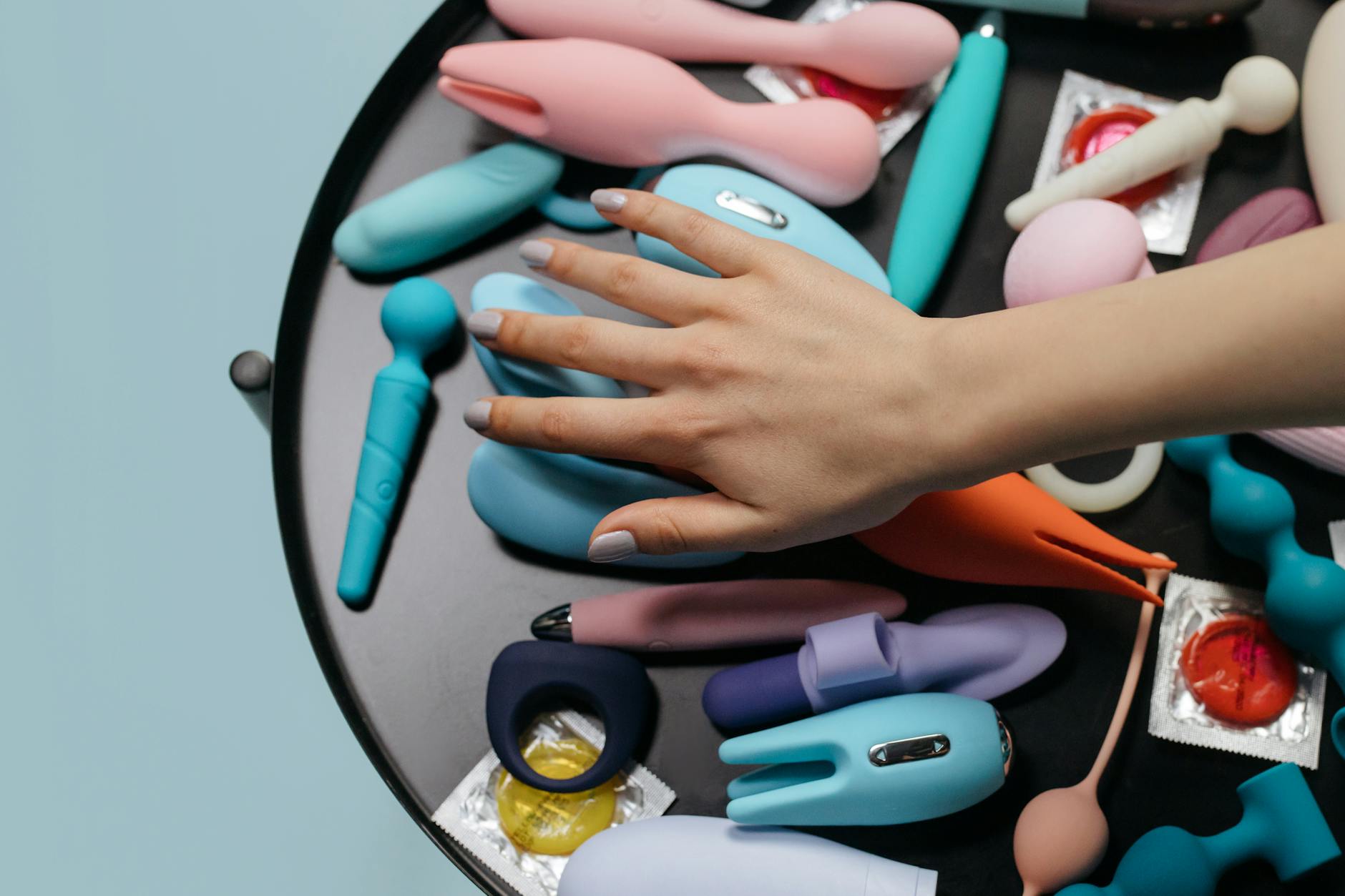
How Lemon Vibrators Help Rebuild Pleasure After Stopping Hormonal Medication
Your sensitivity is waking up again. Here's what that feels like, why it takes patience, and how the right tools help you reconnect with your body on new terms.
You stopped taking hormonal birth control, or your psychiatrist changed your medication, or your doctor pulled you off hormones you've been on for years. And suddenly your body feels like someone else's. Maybe it's numb. Maybe it's hypersensitive. Maybe you literally cannot remember what pleasure felt like, and that scares you more than you want to admit.
Let's get specific. Hormonal birth control, SSRIs, antipsychotics, and certain blood pressure medications don't just affect your mood or your cycle. They reshape the tissue in your vulva, change blood flow to the clitoris, rewire your brain's dopamine and serotonin response to touch, and alter how quickly you can get aroused. Some suppress libido entirely. Others numb sensation so completely that you stop noticing anything below the waist.
Then you stop taking it (for whatever reason, and that reason is valid). Your body doesn't flip a switch back to normal overnight. It takes weeks, sometimes months, for the neural pathways to reset. For blood flow to redistribute. For the tissue to regain its natural thickness and sensitivity.
During that window, many people describe their clitoris as "waking up" but in a confusing way. Like pins and needles. Like nothing and everything at once. Like your pleasure mechanism has to relearn its own language.
This is where a lemon sucker style vibrator becomes invaluable. Here's why specifically.
Most traditional vibrators work by vibration or direct pressure. If your tissue is still thickened from medication, or your nerve endings are ultra-sensitive as they reconnect, either approach can feel wrong. Too intense. Too numb. Frustrating.
Lemon vibrators, including the Lem by Hello Nancy, use air-pulse suction technology. This means the toy gently oscillates a small opening against the clitoris, creating a rhythmic sucking sensation rather than grinding or buzzing. That suction wakes up sensation without overwhelming it. It's precise without being harsh. It mimics the kind of stimulation your body was probably designed to respond to before medication flattened everything down.
For bodies reconnecting with pleasure, this matters. A lot.
Week 1-2: Numbness often increases before it decreases. Your body hasn't figured out the new neurochemical landscape yet. Some people describe this as "the quiet before." It's temporary.
Week 2-4: Tingling, twitching, unexpected surges of sensation. Your clitoris is waking up. This is when you might reach for a lemon clitoral vibrator for the first time and feel it clearly. It might be too much. Start at the lowest pattern and just sit with it.
Week 4-8: Sensation stabilizes. You're getting a clearer picture of what your body can feel. This is when many people start to recognize what arousal feels like again. It might be different than before. That's okay.
Week 8-12+: Pleasure capacity often deepens. Your dopamine system is recalibrating. The combination of returning tissue sensitivity and a resetting brain creates new possibilities. People often report this is when using a lemon vibrator becomes genuinely pleasurable, not just a test.
This timeline is approximate. Some people move through it faster. Some slower. Medication type matters. So does baseline sexuality, stress, relationship dynamics, and honestly, just luck. But the arc is common enough that you're not alone in it.
Start absurdly low and stay there longer than you think you need to. If your lemon vibrator has a pattern 1, that's where you live for at least five sessions. Your body doesn't need speed right now. It needs repetition and gentleness. You're retraining neural pathways. That takes consistent, low-intensity touch.
Use it as exploration, not as a performance goal. Right now your job is not to orgasm. Your job is to notice. What does pattern 1 feel like? What about 2? Where does the Lem feel best against your clitoris? Higher, lower, off to the side? Spend fifteen minutes just mapping sensation. No agenda. This is research, not work.
Pair it with lube. Even if you're getting natural lubrication, a water-based lube helps the suction work optimally. Plus, the act of applying lube is sensory data. You're reminding your body that touch is coming. That warmth. That attention. All of that signals safety to your nervous system.
Honestly, the mechanics of sensation returning are only half the story. The other half is permission.
When medication flattened your pleasure, you might have adapted by deciding pleasure wasn't for you anymore. You stopped trying. You told yourself you were fine without it. You maybe started to believe that was true, even though some part of you grieved it.
Now your body can feel again, and there's often a lag time where your mind doesn't trust it. Or your relationship tangled around the numbness and hasn't untangled yet. Or you're nervous you'll become reliant on the toy and lose the ability to feel anything else. Or you're scared if you let yourself want this, you'll be disappointed if medication dulls it again.
All of those are real. All of them require you to move slowly and stay honest with yourself. Using a lemon clitoral vibrator to reconnect isn't about forcing fast pleasure. It's about gathering evidence that your body still works, still responds, still deserves attention.
Some people get the opposite problem. After months of numbness, sensitivity comes roaring back and it's almost painful. The clitoris becomes hypersensitive. Touch that felt impossible three weeks ago now feels like too much.
In this case, a lemon vibrator is still useful, but in a different way. The air-pulse suction of devices like the Lem allows you to stimulate the broader vulval area or the clitoral hood rather than the glans directly. You can pull back. You can control the intensity more finely than with most vibrators. If you find yourself overwhelmed, you have options. You're not locked into one intensity or one sensation.
If you're in a relationship, this is worth discussing before you restart sexual activity. Not in a heavy way, but honestly.
"My body is relearning sensation. It might not respond the way it used to. That's not about you. I'm going to need to explore this on my own timeline, with some tools that help me understand what I'm feeling. When I'm ready, I'll let you know how you can help."
Your partner doesn't have to understand every detail. But they need to understand you're in a process, and that process can't be rushed or redirected by their desire for things to feel "normal" again. Reconnecting with pleasure after medication is delicate. It requires real space.
How long before I can orgasm again after stopping hormonal medication?
It varies wildly, but for most people it's between 4-12 weeks. Some people report the first orgasm coming back within days. Others take months. It depends on how long you were on the medication, the type, your baseline sensitivity, stress levels, and relationship context. A lemon clitoral vibrator can help shorten this timeline by providing consistent, precise stimulation that doesn't require your body to generate all the arousal on its own.
Can a lemon vibrator make things worse if I'm already numb?
No. The suction technology is gentle enough that it won't damage tissue or cause pain. If you're still completely numb after weeks off medication, a vibrator can't hurt you. But numbness that doesn't shift after a month is worth mentioning to your doctor. Sometimes medication lingers longer than expected or there's an underlying thyroid issue. Get checked out before assuming it's permanent.
Will using a toy make me dependent on it?
This is a real worry, but the data says no. You're not building a addiction. You're building neural pathways. Using the Lem right now is like physical therapy for your pleasure system. Once sensation fully returns, most people find they can access orgasm a bunch of different ways. The toy becomes one option, not the only option.
What if my partner wants sex before I'm ready?
You say no. Clearly and without apology. Reconnecting with pleasure is not a team sport in the early stages. This is your body, your timeline, your nervous system. Your partner's impatience doesn't move that timeline faster. It only adds pressure, which your nervous system will interpret as danger, which makes everything slower. Set the boundary. Keep it.
Can I use a lemon vibrator while still taking the medication I need to stay on?
Absolutely. The toy itself doesn't interact with anything. But your sensation might be muted while you're on the medication, so you might need to be more patient with yourself and use lower intensity patterns. Don't bail on the vibrator just because it feels different on medication. It's still useful, still gathering data. When you do eventually adjust meds, you'll have a baseline understanding of what works.
Is it normal that sensitivity feels different than it did before I started medication?
Completely normal. Your body has changed. Medication was on it for years. That imprints itself. Reconnected pleasure often feels different than original pleasure. Different isn't worse. It's just different. Some people find the second version is actually better. You're older, you know yourself more, you have better tools. That counts for something.
Rebounding from hormonal medication isn't a story with a clean three-act structure. It's months of your body and brain slowly rewiring themselves. Some days sensation feels like it's back. Other days it vanishes. That's not a setback. That's the nervous system learning.
A lemon vibrator becomes a tool in that process. Not a magic fix. Not proof that something's wrong if it doesn't feel amazing immediately. Just a consistent, gentle way to practice sensation, build new neural pathways, and remind yourself that pleasure is still possible.
Your body is coming back. It just needs patience. And sometimes, it needs the right tool to show you that the journey back is worth it.
If you're stuck in this phase longer than feels okay, or if sensation isn't shifting after three months, reach out to a healthcare provider who specializes in sexual health. They can rule out other factors and help you troubleshoot. There's always something that can help. Sometimes it's just a matter of finding what works for your specific body at this specific moment.
You deserve to feel pleasure again. That's not negotiable. Give yourself the time and tools to get there.