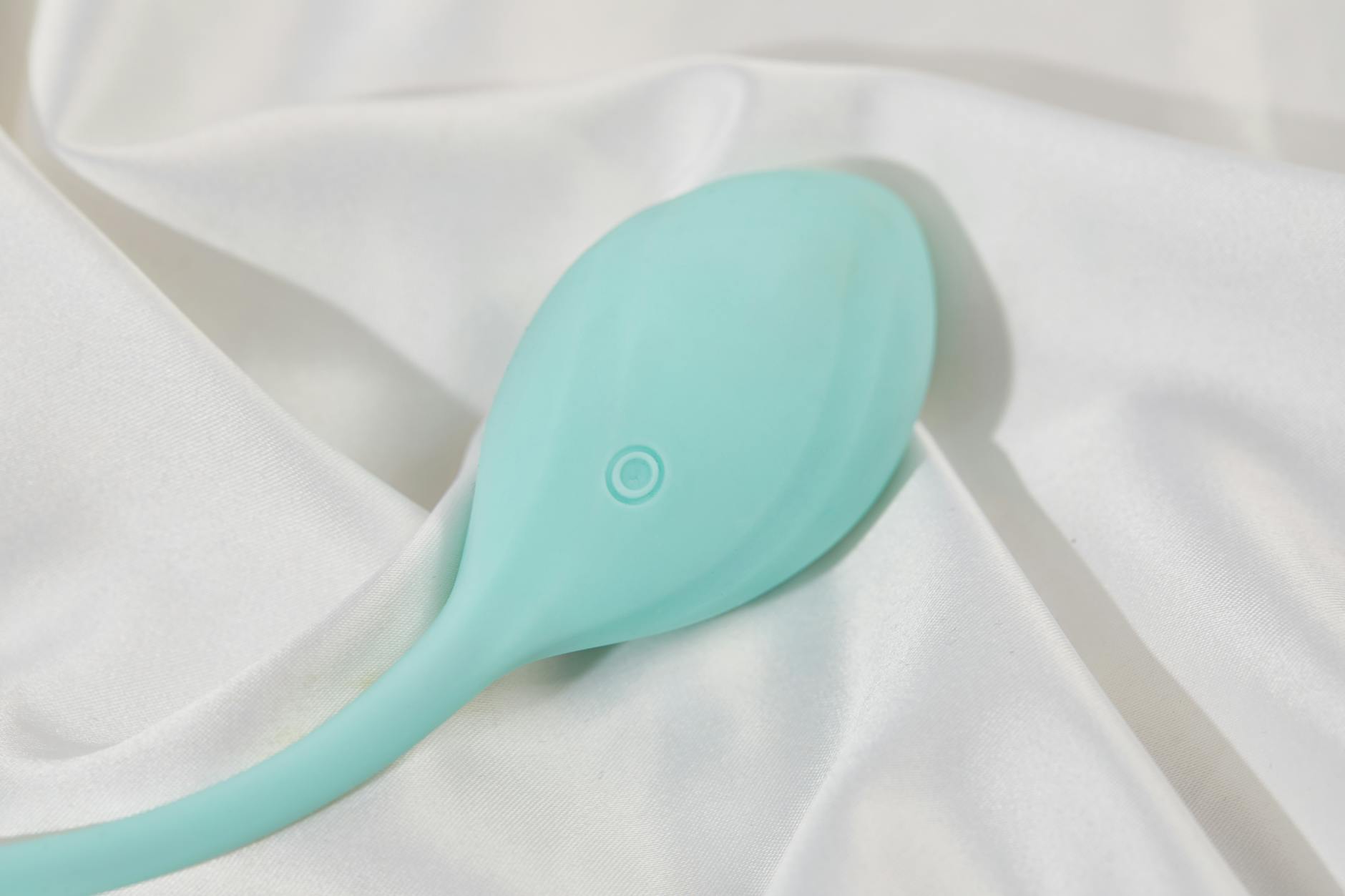
Why Lemon Vibrators Feel Different After Menopause
Hormonal shifts change how your body responds to pleasure. Here's what actually happens, why lemon clitoral vibrators can feel wildly different, and how to reclaim what you thought was gone.
Honestly, this is the conversation no one's having. Menopause changes how pleasure feels, but it doesn't end it. If you've picked up a lemon vibrator after 50 and thought "Wait, why does this feel nothing like it used to?", you're not broken. You're experiencing real, predictable, entirely manageable shifts in how your body responds to sensation.
The good news: understanding what's happening makes fixing it straightforward. The better news: many people find their most intense, most satisfying orgasms after menopause arrives.
Estrogen drops during menopause. This is the biological anchor point for everything that follows. Vaginal tissue gets thinner and less elastic. Lubrication decreases naturally, not because something's wrong, but because the glands that produce it are responding to lower hormone levels.
There's also a ripple effect on the pelvic floor. Less estrogen means less structural support for the muscles and tissues that surround your vulva and vagina. This can change how intensely sensations register, especially direct clitoral stimulation.
But here's what people get wrong: your nerves don't disappear. The clitoris has 8,000 nerve endings. Post-menopause, you still have all 8,000 of them. What changes is the pathway the signal takes to reach your brain. The tissue around those nerves is thinner, which sometimes makes sensations feel duller. Sometimes it makes them feel sharper. The variation is real, and it's individual.
Testosterone also drops, though many people don't realize that bodies with vulvas produce testosterone too. It's a major driver of desire. Lower levels don't mean desire vanishes, but the cognitive urge to have sex often softens. Some find this liberating. Others grieve it.
Lemon clitoral vibrators use suction and gentle pulsing to stimulate the clitoris. This pattern works beautifully for many bodies, but post-menopause, the sensation map changes. Here's why.
The suction mechanism on a lemon vibrator relies partly on skin-to-tissue contact and partly on the rhythmic pressure wave. When tissue is thicker and more elastic, that suction reads as intense, building pleasure that compounds. When tissue thins, the same vibrator can feel oddly subtle, like the sensation isn't quite landing where you expect it.
Many people describe it as "the vibration seems to be happening somewhere else" or "I can feel it's working, but it's not quite the right angle anymore." That's not a failing of the device. That's your nervous system signaling that the geometry has shifted.
The good news is straightforward: lemon vibrators are often more forgiving for post-menopausal bodies than traditional vibrators are. The suction pattern stimulates nerves without requiring the kind of direct mechanical friction that can feel too intense on thinner, more sensitive tissue. You're not fighting the device; you're working with it differently.
Four practical shifts make a measurable difference.
Use lubrication every time. Not because you're broken, but because thinner tissue benefits from the glide. A water-based lube turns a lemon vibrator from "meh" to "oh, now we're talking." The lube isn't doing the work; it's helping your tissue receive the sensation fully.
Start at lower intensity patterns. Most lemon vibrators have multiple settings. Resist the urge to jump to what used to feel good. Start at pattern 1 or 2 and let your body build arousal slowly. Post-menopausal bodies often need 15 to 25 minutes of warm-up instead of 5. That's not laziness; that's how your arousal system now works.
Extend warm-up time. Before you even turn on the vibrator, spend time on foreplay. If you're partnered, prioritize manual stimulation and touch. If you're solo, explore your body without the device first. This does two things: it gives your nervous system time to register arousal, and it tells you where sensation feels sharpest today.
Experiment with angle. Post-menopause, the angle at which the vibrator meets your clitoris matters more. You might find that slightly off-center pressure feels better than direct contact. You might discover that downward pressure amplifies sensation in ways it didn't before. This is exploration, not failure. Every body is different, and yours has legitimately changed.
Here's something nobody talks about clearly: menopause often arrives with other life shifts. Kids leave. Relationships that have been on autopilot surface their real tensions. Your own mortality becomes harder to ignore. Career identity shifts. Grief shows up.
When pleasure changes, it's easy to blame hormones. Sometimes hormones are the culprit. Often, though, the culprit is distraction, disconnection, or plain grief. A lemon vibrator can't fix a relationship that's neglected. It can't process the loss of fertility if that matters to you. It can't solve the anxiety of aging when that anxiety isn't being named.
If you're partnered, the conversation worth having is not "Why doesn't this feel the same?" but "What does pleasure look like for both of us now?" Many couples find that menopause is the moment they finally stop performing and start exploring. The shift is enormous.
If penetration or any kind of sex is painful, book an appointment with a menopause-trained gynaecologist or your GP. Genitourinary syndrome of menopause (GSM) is treatable, often with topical estrogen that has minimal systemic absorption. Pain is not a permanent feature of post-menopause. It's a sign something needs attention.
If desire has completely flatlined and isn't returning after a few months of the adjustments above, testosterone therapy might be worth exploring. It's prescribed cautiously in some places, more openly in others, but it's available and often transformative.
And if you're grieving the loss of pleasure, or if you're partnered and grieving the loss of sexual connection with your partner, a therapist or sex educator who specializes in midlife sexuality can help you rebuild.
I've worked with countless people navigating this shift, and the consistent finding is this: your most satisfying orgasms might still be ahead of you. Not because your body suddenly "works better," but because you've stopped performing, you know your body better, and you're willing to explore without the pressure of fertility or societal expectation.
A lemon vibrator in your 50s or 60s isn't the same device it was in your 30s. But that doesn't make it worse. It makes it different. And if you adjust your expectations, your technique, and your patience, you often find it's better. Your body is not broken. It's evolved.