When one partner finishes first, tension builds. Here's how a lemon clitoral vibrator becomes the bridge that lets you both enjoy the experience without the pressure.
Let's be real. Most couples experience orgasm timing that doesn't line up. One person peaks in five minutes, the other needs twenty. It's wildly common, and it creates a problem that feels awkward to address.
Somebody rushes to catch up, somebody else slows down, everybody's left feeling self-conscious or resentful. Performance pressure kicks in. The thing that's supposed to feel good starts to feel like work.
It's not because anyone's doing it wrong. It's because we've absorbed this narrative that "good sex" means synchronized climax. Movies, books, culture all reinforce the idea that reaching orgasm together is somehow the measure of compatibility or connection.
That's fiction. And it's expensive fiction because it makes partners feel broken when they're just... different.
The physiological truth is simpler. Women, people assigned female at birth, and people with vulvas typically require sustained, consistent stimulation. Most men and people assigned male at birth reach orgasm faster with different types of friction or intensity. These aren't preferences or performance issues. They're just how bodies are wired. Add in variables like medication side effects, stress, or changes in how sensation works at different life stages, and "synchronized orgasm" becomes less a reasonable expectation and more a lottery ticket.
The win isn't matching your partner's timeline. The win is learning to enjoy the full experience without treating orgasm like a race.
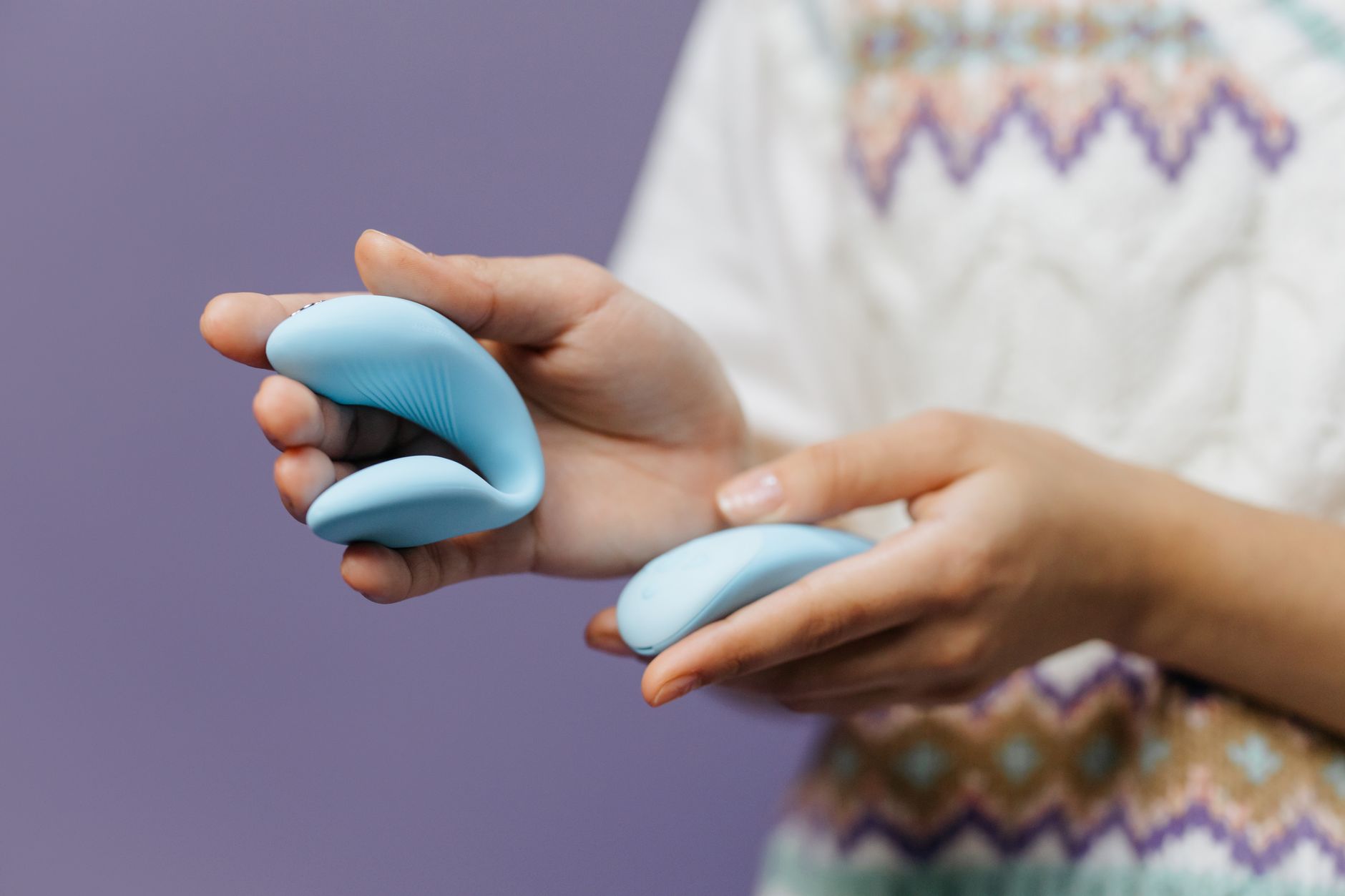
A lemon clitoral vibrator like the Lem lets the partner with a vulva maintain their own stimulation while the other partner controls the pace of penetration or other contact. This sounds simple but it's radical because it decouples "being inside your partner" from "your partner's readiness to orgasm."
Here's what changes:
Instead of rushing or holding back, the faster-finishing partner can focus on pleasure and connection without the cognitive load of pacing their climax. The partner with the vulva can use the lemon vibrator to build toward orgasm at their own speed, without pressure to rush or anxiety about their partner waiting.
You're no longer in opposition. You're in parallel, which feels completely different.
Timing compatibility breaks down into a few common patterns. Here's how to approach each one with a lemon vibrator.
Pattern 1: They orgasm first, you need more time. This is the most common scenario. Use the vibrator during foreplay and throughout penetration or partnered activity. Start at pattern 1 or 2 on the Lem. Your partner can remain inside you, slow, without pressure to maintain any particular pace. The vibrator does the work of building sensation. When they reach orgasm, they stay connected but stop moving. You keep the vibrator on your own rhythm. No stopping, no awkwardness. Just you continuing to build to your own finish line.
Pattern 2: You both need ramp-up time, but at different speeds. Use the vibrator during foreplay to help you reach a high state of arousal before penetration even begins. This gives you a head start. Your partner enters when you're closer to climax. The Lem keeps you climbing while they enjoy the sensation without urgency.
Pattern 3: You finish fast, they finish slowly. Use the vibrator for your own climax first, reach orgasm, let sensation settle slightly, then use it again during or after your partner's penetration. You're adding external stimulation that keeps you engaged and often allows for multiple orgasms or extended pleasure beyond your initial peak. Many people find this actually makes the experience longer and more satisfying than a single quick finish.
This is the part most couples skip, and it's the part that makes everything else work. You can't introduce a vibrator into partnered sex without talking about what you both want from the experience.
Here's what I recommend saying. "I want us both to actually finish satisfied instead of one of us rushing or waiting. Can we try something together? I'm thinking about using a vibrator so I can reach orgasm on my timeline while you're doing your thing. This isn't about you not being enough. It's about both of us enjoying this without pressure."
If your partner bristles, that's information. Some people feel insecure when a vibrator enters the picture. That's real and it's worth acknowledging. But here's the truth worth saying out loud: a lemon clitoral vibrator does something fingers or most partners cannot do consistently. It's not a replacement for connection. It's an addition to connection. It lets both of you relax into the experience instead of managing logistics.
Many people who initially resist a vibrator during partnered sex find that once they experience the removal of timing pressure, they actually want it every time. Because sex without performance anxiety is just better.
If you're new to using a vibrator with a partner, don't overcomplicate it.
First time: introduce it during foreplay only. You use it solo while your partner touches you elsewhere or kisses you. Keep them informed about what feels good. The goal is for both of you to see the vibrator as a tool for pleasure, not a replacement for them.
Second time: use it during penetration, but have your partner stay still so you can focus purely on the vibrator and the sensation of being entered. No thrusting yet. Just presence and pressure.
Third time and onward: your partner moves at whatever pace feels good for them while you control the vibrator. You're building independent pleasure that happens to occur at the same time and place. It feels collaborative instead of coordinated.
Start the Lem on pattern 1 or 2 if you're sensitive or new to vibrators with a partner. You can always turn it up. Speed matters less than consistency right now.
Here's what I see happen in my practice. One partner feels like they're "taking too long." The other feels like they're "not enough." Both feelings are real and both are usually connected to shame.
Let me be clear: neither of you is broken. Your bodies work differently. That's not a flaw. That's just variation.
The vibrator is permission. It says, "Your pleasure matters enough that we're going to make space for it." It says, "I don't need you to rush." It says, "I don't need you to wait." Most importantly, it removes the idea that good sex is synchronized sex.
If using a vibrator with a partner still feels awkward after a few times, the issue might not be the vibrator. It might be that you and your partner need to do some actual talking about sex, pleasure, and what you each want. That's worth doing. A therapist or counselor who specializes in couples' intimacy can help.
The biggest change isn't the vibrator. It's the mindset shift from "we need to finish at the same time" to "we both deserve to enjoy this without pressure."
When you use a lemon clitoral vibrator during partnered sex, you're saying something important to your relationship. You're saying pleasure matters more than performance. You're saying we can both be satisfied even if our bodies work differently. You're saying this is about connection, not choreography.
That reframe actually makes couples closer. Because you're not managing tension. You're both actually enjoying yourself.
The Lem becomes part of your regular toolkit. Not because anything was wrong before, but because why would you go back to feeling rushed once you've experienced what it feels like to relax into pleasure together.
No. A vibrator does one specific thing: it delivers consistent clitoral stimulation at a pace your partner might not be able to maintain. That's not a deficiency. That's just physics. Your partner remains present, connected, and involved. The vibrator is doing one job while they do another. Most partners actually feel relieved when a vibrator enters the picture because the pressure lifts.
Yes, absolutely. The Lem's shape is designed for this. You can position it on your clitoris while your partner penetrates you. It sits comfortably during movement. Start with slower, shallower thrusting while you adjust to the sensation of both things at once, then gradually build from there.
Have the conversation before you use it. Explain that the vibrator lets you both actually reach orgasm without somebody rushing or waiting. Frame it as something you want to try together, not something you want instead of them. If the insecurity persists after a couple of uses, there might be deeper relationship stuff worth exploring with a professional.
The Lem is relatively quiet compared to other clitoral vibrators, especially on lower patterns. If noise is a concern, use lower patterns and have some ambient sound in the background. Most people find it blends into the background noise of sex itself.
Not during the same physical encounter, obviously. But some couples use vibrators during video calls for their own pleasure while watching each other. That's its own dynamic and can feel surprisingly connected if you're both on the same page about it.
That's completely fine. Use the vibrator solo. There's nothing wrong with vibrators being part of your solo routine and also your partnered routine. They're just tools for pleasure. You don't need permission to use them alone.
Orgasm timing doesn't have to be a source of friction in your relationship. A lemon vibrator removes the pressure and lets you both actually enjoy the experience. That's not about the vibrator. That's about giving yourself permission to want pleasure without performance.
If you're curious about trying this, start the conversation. You might be surprised how relieved your partner feels when they realize they don't have to manage your orgasm timeline anymore. Because here's what I know from decades of working with couples: when you stop performing and start actually experiencing pleasure, everything changes. Connection deepens. Satisfaction increases. Sex becomes something you both want to do instead of something you both feel obligated to manage.