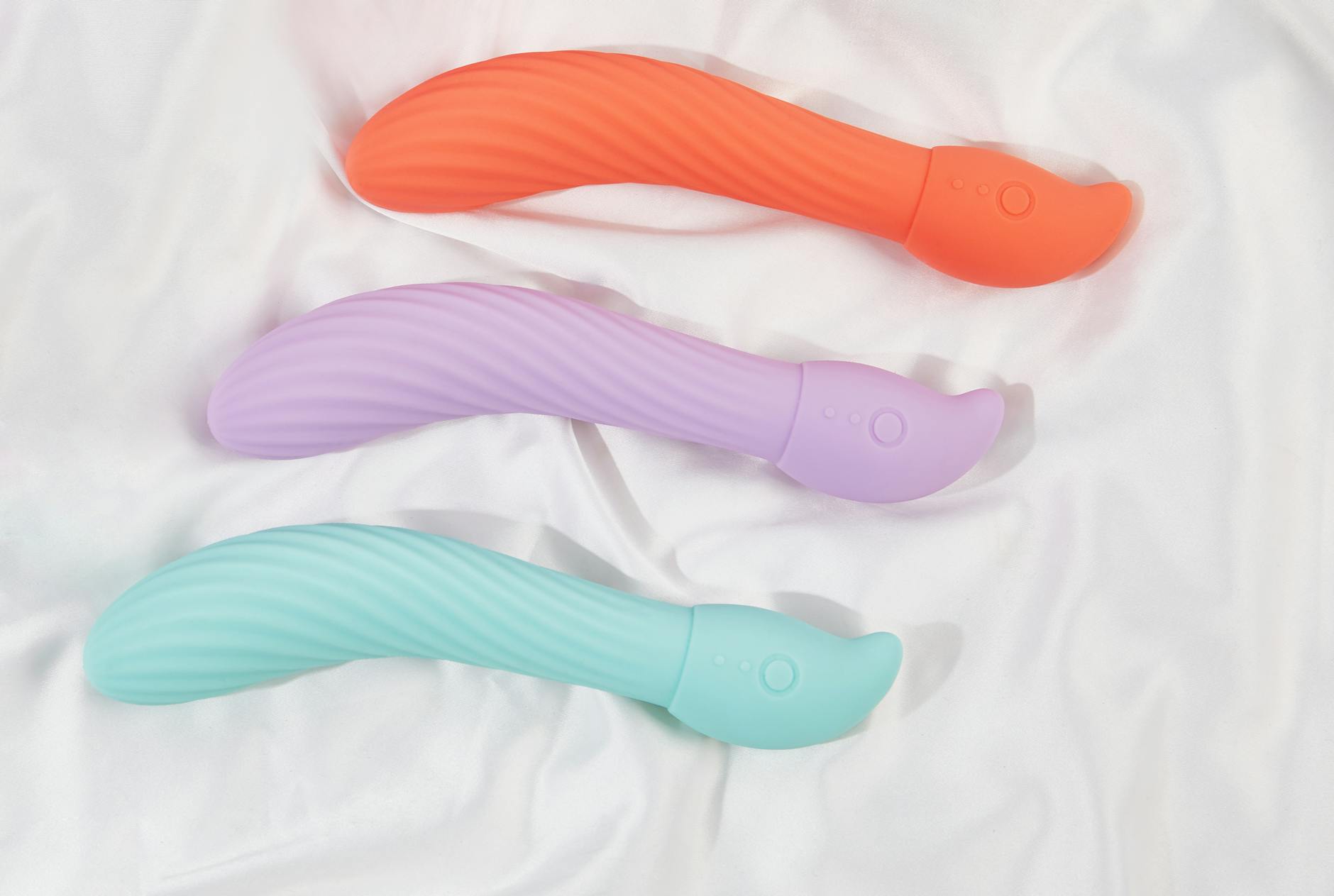
The conversation most couples never have but absolutely should. Here's exactly how to bring it up, navigate the awkwardness, and turn curiosity into connection.
Let's be real. Most couples don't have this conversation. And then they live with the discomfort of not having it.
Introducing a lemon vibrator to your partnership isn't about replacing anything or fixing a problem. It's about expanding what's possible together. But it requires a particular kind of honesty that doesn't come naturally to most of us.
Think about what a vibrator represents for a second. It's a device that can deliver pleasure independent of a partner. For people raised with older relationship scripts, that can feel like a threat. For others, it feels like an admission that something's missing.
Neither of those things is true.
What's actually happening is you're both recognizing that pleasure is complex, and that different kinds of stimulation can coexist. The clitoris responds to suction in ways hands and bodies sometimes can't replicate. A lemon clitoral vibrator doesn't replace your partner. It expands the toolkit.
But I get why the conversation feels like it's weighted. You're essentially saying, "I want more of this part of sex." And that requires admitting you want something specific. Most of us were taught that wanting things during sex makes us needy or unsatisfiable.
That teaching is wrong. But it lives in your nervous system anyway.
Don't bring this up in bed. Don't bring it up after sex. Don't bring it up when you're tired or distracted.
Bring it up when you're both present, relatively relaxed, and not in the middle of another conflict. A walk. A weekend morning with coffee. Somewhere you can actually look at each other.
The location matters because you want to signal that this is a "we're in this together" conversation, not a confession or a complaint. A neutral setting makes that easier.
Honestly, you don't need flowery language. Direct is better.
"I've been thinking about trying something new in our sex life, and I wanted to talk to you about it before I did anything." That's the opener. Simple. Honest. No ambiguity.
Then give them space to react. They might be curious. They might feel defensive or insecure. Both are normal. Don't rush to reassure them into silence.
If they ask what you're thinking of, name it: "I'm interested in trying a lemon clitoral vibrator. I've read about them, and I think it might feel really good." No apology. No over-explanation. Just the fact.
A lot of partners hear "vibrator" and think one of three things. "She doesn't need me." "He thinks I'm not good enough." "This means our sex life is broken."
Here's how I suggest you address those without waiting for them to say them:
"I want to be clear about something. This isn't about anything you're not doing. It's about me exploring what feels good to my body. That's it. It's not a criticism. It's not a replacement. It's an addition."
Then, and this is important, ask them what their concern is. "What's coming up for you right now?" Listen. Don't defend yourself. Just hear them.
Most defensive reactions come from insecurity or fear. You can't logic someone out of that. You can only acknowledge it and then stay steady in your own clarity.
You know your body. You know what you want. That's not arrogance. That's self-knowledge.
This is where the conversation shifts from defense to curiosity.
"I'd actually love for you to be part of this. We could try it together and figure out what works." That invitation changes everything. You're not doing this despite your partner. You're inviting them to discover something with you.
A lemon vibrator works beautifully with partner involvement. Many couples use them during sex together. Some partners enjoy holding it, controlling the rhythm, incorporating it into foreplay. The technology doesn't have to make your partner feel sidelined.
In fact, plenty of people find that introducing a clitoral vibrator into partner sex actually deepens connection because they can see, in real time, what brings their partner to orgasm. That's information. That's intimacy.
Once you've both agreed to try, there's another conversation to have before it arrives at your door.
"How do you want this to work? Do you want me to use it alone first so I understand it? Do you want us to explore it together from the start? When would you want to incorporate it into sex?"
These are logistics, but they matter. Someone who's nervous needs to feel like they have some agency in how this unfolds.
When you actually use the lemon vibrator, communication doesn't stop. It intensifies. "Is this good?" "Does this angle work?" "Do you want me to change the pattern?" That real-time feedback is what makes the experience work. It's not awkward. It's the opposite. It's the whole point.
Here's something I see happen: the first time you use a lemon clitoral vibrator with your partner, something shifts emotionally. Sometimes it's incredible. Sometimes it's vulnerable in a way that surprises people.
You might feel exposed. Your partner might feel something unexpected too. That's not a sign it went wrong. That's a sign it went real.
Check in afterward. "That was intense. How did that feel for you?" Not in a testing way. In a curious way. You're learning about each other.
I want to push back gently on the language we use. Most people call vibrators "toys," and I understand why. But the word "toy" suggests it's optional, a novelty, something peripheral to the real thing.
A lemon vibrator is more like a tool. It's a device that helps you access pleasure more efficiently. The way a reading lamp helps you see better. It's not replacing the sun. It's expanding what's available to you.
Once you reframe it that way in your mind, the conversation with your partner becomes different. You're not asking permission to do something extra or kinky. You're asking to optimize something that matters to both of you.
Maybe the sensation isn't what you expected. Maybe your partner is still uncomfortable. Maybe the timing or the angle or the whole thing just feels off.
That's information, not failure.
Go back to communication. "That wasn't what I imagined. Let's try something different." Or "I think I need more time to warm up to this." The lemon vibrator isn't going anywhere. You can revisit it.
One of the gifts of this conversation and this experiment is that it normalizes talking about what's working and what isn't. Most couples never do that. They just exist in dissatisfaction.
Completely normal. Your partner might be worried they're not enough, or that you're choosing the device over them. That's usually not about the vibrator at all. It's about deeper fears about desirability or being needed. The antidote is honest conversation and reassurance, but also clarity: you can want both. You can want your partner and also want a clitoral vibrator. Those things coexist. Most people eventually see that the vibrator actually enhances their partner sex because it removes the pressure to perform.
Start smaller. "I want us to be able to talk more openly about sex. It feels important." Then take a beat. Let them sit with that. You don't have to jump straight to vibrators. Build the muscle of sexual conversation first. Once you can say "I like when you touch me here" or "Can we try a different position," introducing a lemon vibrator becomes the next logical step, not a bolt from the blue.
Your body, your choice. Full stop. And the same courtesy should extend to them. If they want to explore a vibrator and you're not interested in participating, that's okay. If they want to use it alone, that's also okay. Boundaries are healthy. The conversation just shifts: "I'm not ready to use this together, but I'm okay with you exploring it." That's a boundary spoken with generosity.
It depends on your dynamic. Some couples like shopping together because it removes shame and turns it into a shared experience. Some prefer one person to research and choose based on the other person's preferences, which can feel more intimate. There's no right answer. What matters is that both people feel agency. If you're buying it as a gift, you might ask: "Would you rather pick something out yourself, or would you like me to choose something I think you'd like?" That question itself signals respect.
If one of you has a sensitive clitoris or experiences pain with direct vibration, a lemon clitoral vibrator's suction technology might actually be more comfortable than a traditional vibrator. Why Lemon Clitoral Vibrators Work Better for Sensitive Tissue goes deeper into that. If you're not sure what you want, the Best Lemon Vibrator for Beginners guide walks through the actual options without pressure.
Then you tried it. You have data. Not every experiment works. The failure isn't in the trying. It's in the assumption that every tool will work for every couple. Some people love a lemon vibrator. Some people never use it again after the first time. Both are fine. What matters is that you both felt heard and safe enough to explore.
Introducing a lemon vibrator to your partnership isn't about fixing anything or proving anything. It's about saying, "I want to know more of you, and I want you to know more of me. And I'm willing to be awkward and honest to get there."
That willingness is what builds real intimacy.
The vibrator is just the vehicle.
If this conversation still feels too big to have alone, a couples therapist can hold space for it. But honestly, most couples can move through this with nothing but honesty and a little courage. Start the conversation. Listen. Adjust. Explore together.
Your pleasure matters. Your partner's comfort matters. Both can be true at the same time.