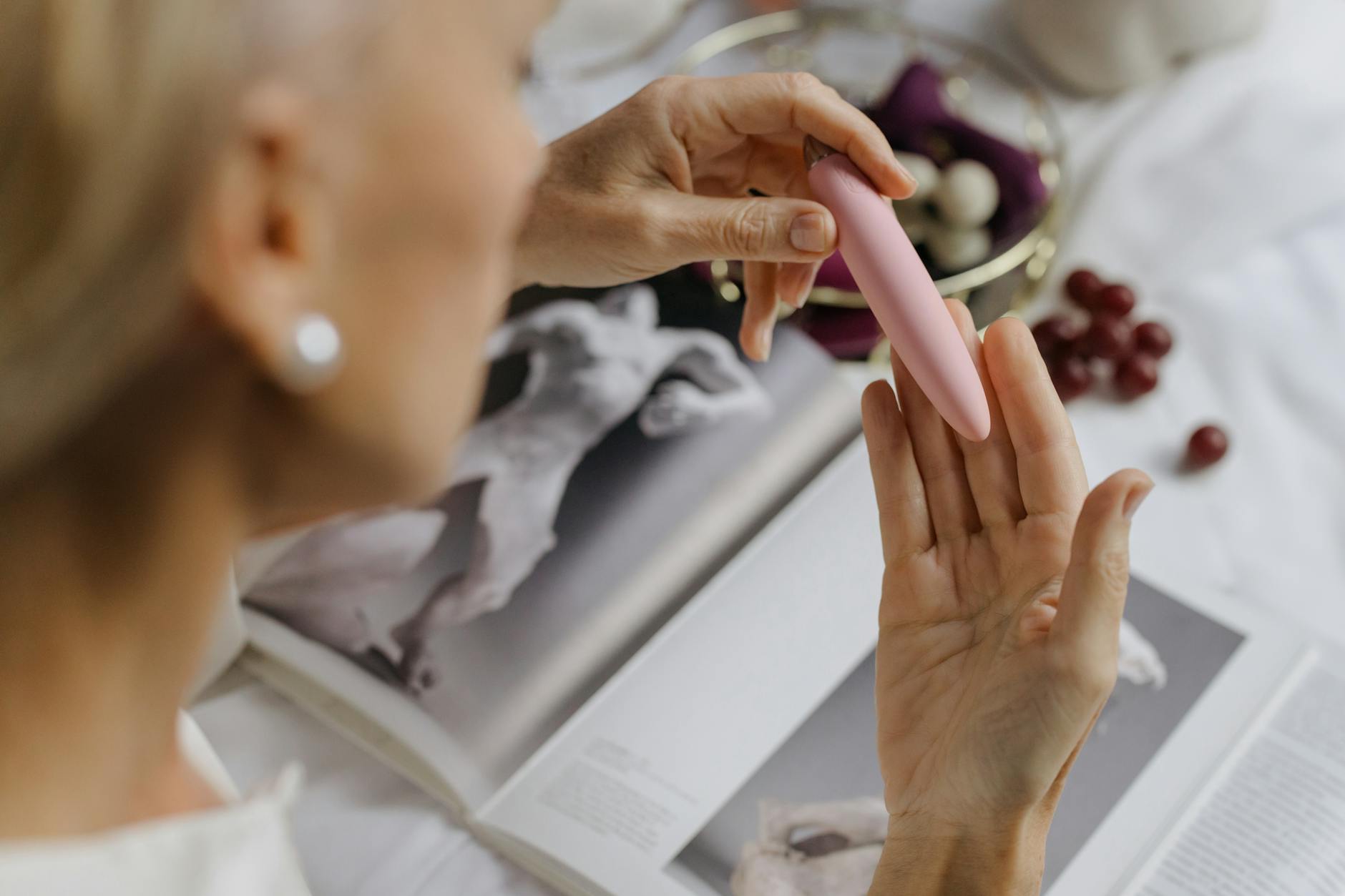
Your body changed. The arousal that used to hit in thirty seconds now takes ten minutes. The patterns that always worked feel muted or oddly intense. Orgasms feel different—sometimes weaker, sometimes sharper, sometimes they arrive from a totally unexpected angle. And your first thought is probably: "Am I broken?"
Hormonal shifts (from birth control changes, pregnancy and postpartum, perimenopause, medication, or even just aging) alter how your nervous system responds to touch. The neural pathways for arousal didn't disappear. They just reorganized. And a clitoral vibrator like the Lem can actually help you map the new geography faster than you'd think.
Here's the mechanical part. Estrogen and progesterone don't just regulate fertility. They regulate blood flow to genital tissue, which means they control how quickly that tissue swells and becomes sensitive. When hormone levels drop or change ratio, blood flow patterns shift. That means the clitoris takes longer to become engorged. It might swell less than it used to. The nerve endings are still there, but the tissue they're wired to is responding differently.
Testosterone (yes, everyone with a vulva produces it) also drops during certain hormonal transitions. Testosterone contributes directly to desire and to the speed at which arousal builds. Lower testosterone doesn't mean no desire, but it often means desire feels slower to arrive, quieter, harder to recognize.
Add in the fact that thinner tissue (from lower estrogen) is more sensitive to direct pressure, and suddenly the vibration intensity that used to feel perfect now feels too sharp. You're not numb. You're actually more reactive to certain kinds of input. You just need to find the right input.
That's where sensation usually gets misread as loss.
Your fingers feel good, sure. But fingers provide direct pressure friction. A clitoral vibrator like the Lem works differently. It uses suction combined with vibration, which stimulates nerve clusters without relying on tissue thickness or blood flow to create sensation.
The genius of this design is that it works with hormonal changes, not against them. When tissue is thinner, suction feels more responsive. When blood flow is slower, you don't need aggressive pressure—gentle suction does the job. When your arousal timeline has stretched, the Lem's lower patterns give you something to build from that doesn't feel abrasive.
Lemon adult toys are specifically designed for this kind of relearning.
Many people also find that the suction sensation feels less dependent on arousal state than friction does. Meaning you can use the Lem and feel something even on days when you're starting from zero arousal. That feedback loop—the sensation itself building toward desire—can actually be easier than waiting for desire to show up first.
Here's what I tell people rebuilding sensation after hormonal changes.
Start at pattern 1. Not pattern 2. Not "whatever felt good before." Pattern 1. Hold it there for a full minute. Your job isn't to orgasm. Your job is to notice what you're actually feeling right now, in this body, on this day.
After a minute, move to pattern 2 and repeat. Notice what changes. Does it feel sharper? Warmer? The same? There's no wrong answer. You're gathering data.
Spend 5 to 10 minutes moving through the lower patterns—1 through 4—before you consider going higher. This isn't foreplay. This is a nervous system reset.
Once you've mapped what the lower patterns feel like, you can start playing with placement. Maybe the Lem feels better on the upper part of the clitoris. Maybe the side feels more responsive. Maybe rhythmic pressure (holding pattern 3, taking it off, putting it back on) feels better than continuous stimulation. These details matter because they're your new baseline.
Most people find that sensation returns faster this way—sometimes within a few sessions—because you're not fighting against changed anatomy. You're learning it.
Hormonal changes almost always slow down arousal. It's not that you can't get there. It's that the timeline stretched.
Usually, this means moving from a 5-minute warm-up to a 15-to-20-minute one. That feels like loss until you reframe it as gain. Longer arousal buildup means more time for your nervous system to alert your brain that something good is happening. It means more time for physical pleasure and psychological desire to sync up.
The Lem actually helps with this because you can start at a lower pattern while you're doing other things—reading something sexy, thinking about your partner, building narrative in your head. Then, as your arousal actually does start to gather (and it will—hormonal changes slow things down, they don't stop them), you have feedback that says "okay, your body is responding." That feedback often speeds up the psychological part.
Some people find that even pattern 1 feels too intense after certain hormonal shifts. If that's you, the answer isn't to give up. It's usually one of three things.
Positioning. Angle matters wildly. Try the Lem at different angles—straight on, slightly off to the side, with gentle pressure versus barely touching. You might find that one specific angle at pattern 1 feels perfect, while another feels too much.
Lubrication. Water-based lube helps the Lem glide more smoothly, which distributes sensation differently. Even a small amount can change how intensity feels.
Arousal state. If you're using the Lem when you're genuinely not aroused—just trying to make it work—intensity will feel sharper. Spend time on mental arousal first. Read erotica, listen to audio, recall a fantasy, have your partner touch you elsewhere. Then bring in the Lem. The same intensity feels totally different when your brain is already primed.
If you have a partner, hormonal changes create a weird conversational trap. You might assume they know something changed, or they might assume you're just not interested anymore, or you might both pretend everything's fine while actually feeling distant.
The actual useful thing to say is simple: "My body's responding differently right now. We can figure this out, but I need to understand it first." That sentence does two things. It signals that this is about your body, not about them or your relationship. And it gives you permission to spend a few weeks (or months) just relearning your own pleasure before you fold a partner back into the equation.
If they want to participate in that relearning, great. They can watch you use a lemon vibrator and learn what your new patterns are. They can learn that pattern 2 hits differently than it used to. They can understand that the warm-up time is genuinely needed now, not a sign of dysfunction.
Most partners are relieved to have any information instead of guessing.
If you've been working with this for 4 to 6 weeks and sensation genuinely hasn't started returning, or if you're experiencing pain, that's when to loop in a doctor.
Sometimes hormonal changes need actual medical support. Topical estrogen cream, systemic hormone therapy, thyroid work, or even just identifying that a medication you're on is tanking your response. A menopause-trained gynaecologist or a therapist who specializes in sexual health can help you figure out what's actually happening.
There's no badge for suffering through this alone. Medicine and therapy exist for this exact reason.
Most of my clients report that once they stop fighting the change and actually lean into relearning, sensation comes back stronger than before. Not always identical. But deeper, more focused, sometimes multiple orgasms where there used to be one.
This isn't luck. It's what happens when you pay attention to your own pleasure instead of defaulting to old patterns. The Lem is just the tool that makes that attention possible.
It varies wildly. Some people feel significant shifts within 2 to 3 weeks of relearning with a lemon vibrator. Others need 2 to 3 months. The timeline depends on what caused the hormonal change (birth control switch usually feels faster than perimenopause), whether you're getting consistent feedback from a device like the Lem, and your baseline stress level. Patience matters more than speed here.
Yes. Actually, using a clitoral vibrator during hormonal adjustment is often more helpful than waiting. The feedback from the device helps your nervous system recognize what sensation is available right now. You're not fighting against your body. You're getting to know it in its current state.
Completely. Suction-based stimulation like the Lem works more effectively on tissue that's thinner or has reduced blood flow—exactly what you get with hormonal changes. Regular vibrators rely more on tissue thickness and blood flow to create sensation. That's why lemon adult toys are so useful during hormonal transitions. The mechanism itself matches what your body can actually do right now.
Tell them directly. "My body's responding to stimulation differently now, and I'm learning what works." That conversation is infinitely better than them noticing and wondering if they're doing something wrong, or if you're losing interest. Most partners actually find it hot to participate in figuring out your new patterns together.
Yes, if you're working with a menopause specialist or sexual health doctor. They need to know how you're experiencing your body. If you're seeing a regular GP, you can keep it simple: "I'm using tools to understand my current arousal pattern." The specific tool doesn't matter medically—what matters is whether your sensation is actually improving or if something else is going on.
Absolutely. Water-based lube plus the Lem plus a partner's touch can create a totally different sensation profile than the Lem alone. Layering different inputs is often what finally cracks through to real arousal when hormonal changes have muted single inputs.
Your pleasure matters. Not as an afterthought. Not as something to "get back to" once everything else is handled. Right now, while your body is reorganizing, it deserves attention and patience and honestly, a really good tool. That's not indulgent. That's maintenance. Get to know this version of your body. The lemon clitoral vibrator is basically permission to do exactly that.