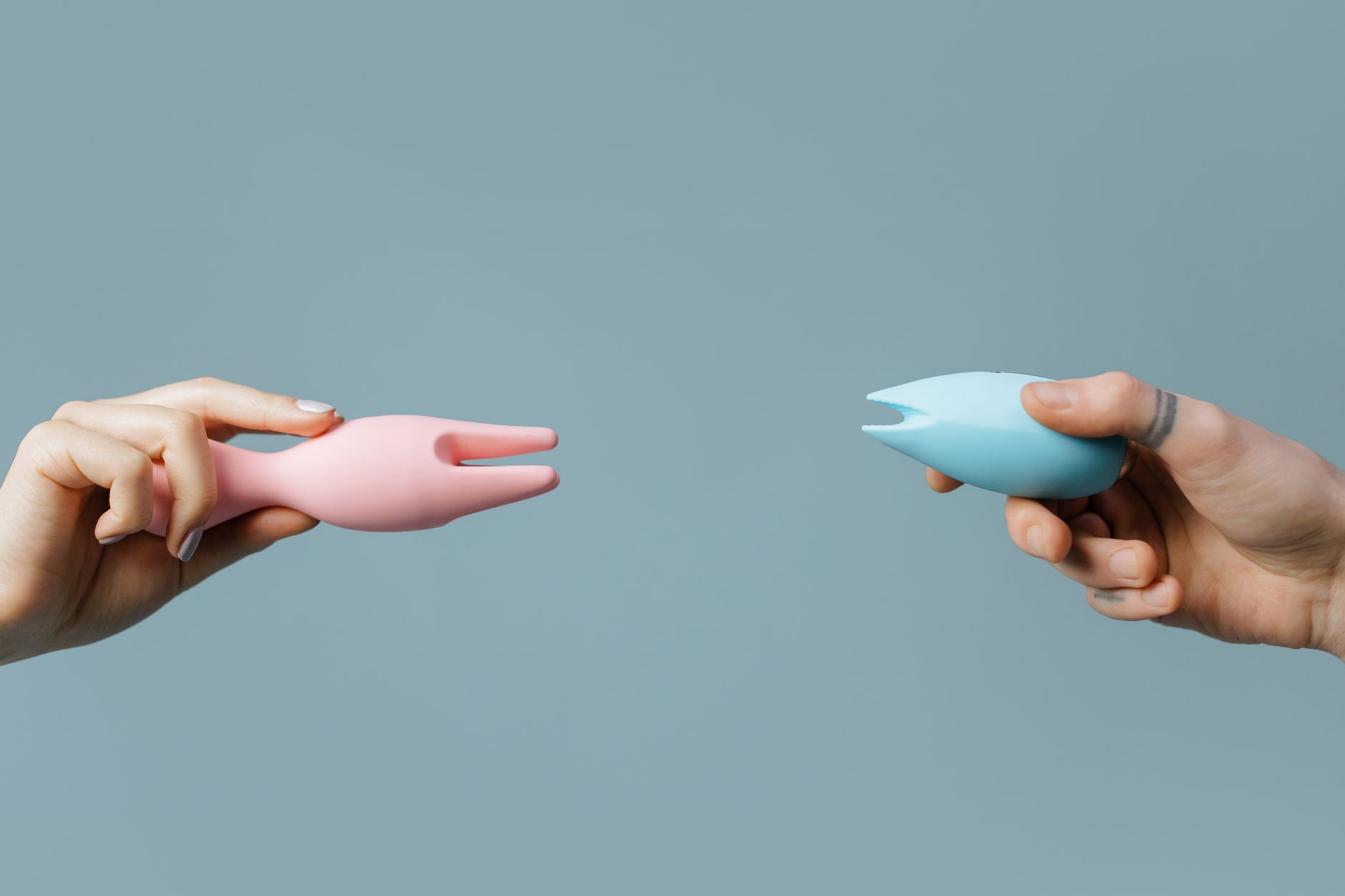
How to Use a Lemon Vibrator When Condoms Affect Sensation and Comfort
Condoms are non-negotiable for safety, but they change how everything feels. Here's how a lemon clitoral vibrator keeps your pleasure from getting lost in translation.
Condoms save lives and relationships. They also muffle sensation in ways that nobody really talks about until you're already mid-sex and realizing everything feels muted. The latex or polyurethane barrier reduces direct contact, which means less friction feedback for your partner and significantly less clitoral stimulation for you. Add in the fact that some condoms can feel drying or sticky depending on the lube, and what's supposed to feel good starts feeling like a chore.
When your partner wears a condom, you're losing direct skin-to-skin contact during penetration. Your vulva still gets indirect stimulation, but the intensity and clarity drop. Some people describe it like the difference between touching someone's hand through a glove versus bare skin. It's still touch, but the resolution is lower.
For many people, this matters more than penetration itself. Clitoral stimulation is where the orgasm actually lives. Condoms don't eliminate it, but they do reduce the signal-to-noise ratio. Your nervous system is getting less clear feedback about what's happening, so arousal builds slower and orgasm feels further away. That's not a personal failing. That's neuroanatomy.
Worse, the mental load of "will I feel this?" or "are we doing this wrong?" gets in the way. You're now dividing attention between the physical experience and anxiety about the physical experience. Your brain isn't available for pleasure anymore. It's on logistics.
A lemon clitoral vibrator solves both problems at once. It gives you direct, intense stimulation that doesn't go through the condom barrier. The suction-based technology of a device like The Lem bypasses friction entirely and works on nerve endings that condoms don't reach. You get consistent sensation exactly where you need it, regardless of what's happening with penetration.
Second, it shifts the mental load. You're no longer trying to coax sensation out of muted contact. You're actively stimulating yourself, which means you're in control of your own experience. That changes everything psychologically. You go from "I hope this works" to "I'm making this work," and that agency alone amplifies arousal.
Third, a lemon clitoral vibrator frees your partner from having to be the sole engine of your pleasure. During condom-protected sex, partners often feel pressure to do more, go harder, or last longer to compensate for reduced sensation. That pressure backfires. They get tired, frustrated, or performance-anxious. Introducing your own stimulation takes that burden off entirely.
The positioning that works depends on your usual arrangement. If you're on top, you can hold The Lem and apply it yourself during thrusting. If you're on your back, your partner can apply it for you while moving inside you. If you're side-by-side, either of you can reach easily.
Start with the vibrator powered on and at a lower pattern before your partner enters. Get yourself to around 70-80% arousal this way. Your body will be primed, the condom will be in place, and then you add penetration on top of stimulation that's already building. This is the opposite of trying to manufacture sensation after the fact.
Talk about it first. "I want to use The Lem during sex" isn't a request that requires deep conversation, but it does need five seconds of light communication. Most partners love it because it takes pressure off them and tangibly improves the experience for both of you. Frame it as "this feels better" not "you're not enough."
One thing that trips people up: when you combine a vibrator with penetrative contact, sensation can suddenly feel intense in new ways. You might need to drop The Lem's intensity down from what you usually prefer solo. That's normal. Different types of stimulation don't stack in a linear way. Suction plus penetration equals more total stimulation than just suction alone, even if the vibrator is at the same setting.
Start conservative. You can always turn up the intensity mid-session. You can't un-ring the bell on "that was too much." If you find that you need to shift your position because the angle changes sensation, do it. Your pleasure isn't static. It moves around during sex, and your tools need to move with it.
One more thing: water-based lubricant works with any condom material, and it makes everything feel smoother for both of you. Silicone-based lube will damage silicone vibrators, so stick with water-based if you're using a lemon clitoral vibrator during partnered sex. That small detail keeps your device safe and sensation consistent.
Using a vibrator with a partner is sometimes complicated by insecurity. Your partner might worry that introducing a device means they're not satisfying you. You might worry that asking for it signals dissatisfaction. Neither is true, but the feelings are real.
Here's the reframe that helps: a lemon vibrator isn't a replacement for your partner. It's a tool that lets you both experience partnered sex the way you want it to feel. You're not choosing the vibrator over them. You're choosing yourself. And partners who genuinely care about your pleasure usually get that right away.
If they don't, that's information too. Your pleasure matters. It's not selfish to protect that.
Sometimes the issue isn't condoms in general, it's the wrong size or type. A condom that's too loose slips. A condom that's too tight restricts sensation further and limits blood flow for your partner. If standard condoms feel particularly numb, try a thinner brand or verify that sizing is right. Better fit plus a lemon clitoral vibrator is a much more effective combination than trying to force sensation out of an ill-fitting condom.
Some people also have latex sensitivity without knowing it. Condoms are available in polyurethane, polyisoprene, and other materials now. If sensation has always been muted during condom sex, it might be worth trying a different material alongside your vibrator.
If your partner struggles to maintain an erection under a condom, that's another common problem that lemon sexual toys help solve. When they're feeling pressure to perform under reduced sensation, anxiety spikes and erections fade. Switching to a vibrator for your main stimulation takes that heat off. They can relax, focus on the intimacy itself rather than the mechanics, and sensation often improves for both of you.
This is where a lemon clitoral vibrator becomes genuinely collaborative. You're not fighting condoms together. You're working around them together, and that shift in perspective often reconnects couples who've started dreading condom sex.
After the first time using The Lem during partnered sex, you might find you prefer it every time. You might use it sometimes. You might use it for certain types of sex and skip it for others. All of those are fine. Your pleasure rhythm gets to be flexible.
The key is normalizing it so that it stops being a special conversation and starts being part of how you have sex. "Grab The Lem" becomes as routine as "where's the condom." That's when the real magic happens. You're not thinking about the vibrator anymore. You're just present in the experience, which is where pleasure actually lives.
Condoms don't have to mean numb sex. A lemon clitoral vibrator makes sure of it.
Yes. Lemon clitoral vibrators work with latex, polyurethane, polyisoprene, and all other condom materials. The vibrator stimulates your clitoris independently of what's protecting your partner, so there's no mechanical conflict. Water-based lube works with every condom type too.
No. Using a vibrator means you want to feel good during sex. Those are separate conversations. A partner who cares about your pleasure understands this distinction immediately. If they don't, that's a relationship communication issue, not a pleasure issue. Consider talking to a couples counselor or sex-positive therapist if this becomes a sticking point.
That's worth addressing directly and early. Start with "I want to feel more during sex. This tool helps with that. It's not about you." If they're still resistant, dig into what the resistance is actually about. Often it's insecurity or a misconception about what vibrators mean. Sometimes it's deeper relational tension that needs more support to unpack.
Rinse it with lukewarm water immediately after sex, then wash with mild soap and water or a toy cleaner designed for silicone. Dry it completely. You can use it again within minutes if you want. Silicone is non-porous, so bacteria don't hide in it the way they do with other materials.
That's entirely up to you and what feels good. Some people like continuous stimulation. Others prefer turning it on only when they need an intensity boost. Some use it to get close, then have their partner take over for the final push. There's no right answer. Your preference is the right answer.
That's actually a great way to start. A partner who wants to explore vibrators with you is invested in your pleasure. Start low on the intensity setting, use water-based lube, and give yourself permission to enjoy it without performance pressure. If you want more detail on first-time vibrator use, check out our guide on trying a toy with a new partner.